THE PITT (IN MY HEART)
Besides being an excellent, Golden Globes and Emmy award-winning television program, The Pitt is also extremely verdant ground for triggering medical trauma. Fittingly enough, the show itself actually deals with that, primarily in the reactions the protagonist (Dr. Michael “Robbie” Robinavitch) experiences to the confluence of current and remembered events. These are, in fact, the central themes and tone of the show.
But worry not, dear reader, I am not turning this blog into a television and film review. Though you should definitely see The Pitt, don’t expect this post to take you as near to the show as we went with Deborah & Ava & Marcus & Jimmy & Kayla & Josefina & Damien. Instead, I’d like to talk about how dramatic re-enactments of medical emergencies can cause adverse reactions in the viewer.
For those who don’t know, The Pitt takes place at the fictional Pittsburgh Trauma Medical Center, primarily in the Emergency Department (ED). When I had the heart attack back in August of 2024, the beginning of my medical journey took place in the Haliburton Highlands Health Services emergency room. You can read all about this in these two blog posts:
Being the incurable smart ass that I am, I felt it necessary (despite the heart attack) to crack wise with the medical professionals taking care of me. As I’ve previously written, though I didn’t feel like I was about to die in those moments, I was fully aware that a precipitous drop in my health and consciousness was potentially imminent. Even though goofing off is first nature for me, I think the humour helped me cope with the fear and uncertainty of the moment. Yes, I honestly come by being a goofball; but that doesn’t mean that it also can’t be, separately, a coping mechanism. I identify with that moment very strongly, and remember it more clearly than anything other than the first stent insertion surgery.
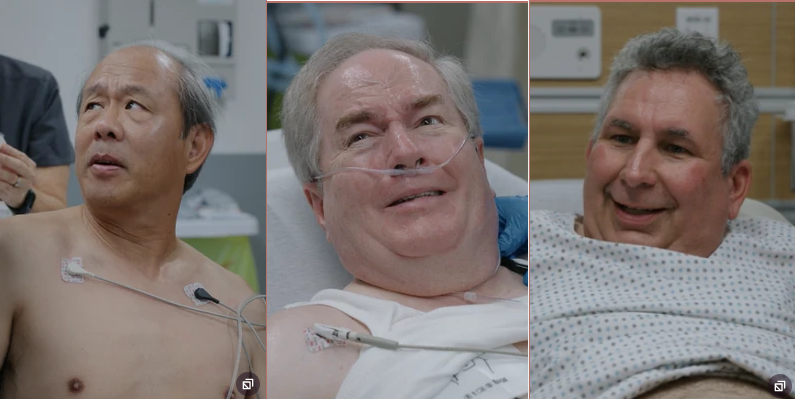
These three jokers kept it real
Most of the people who enter The Pitt ED with signs of a heart attack are not conscious. But that was not the case with Ed, portrayed by Timothy Davis-Reed, or with Harvey, portrayed by Robert Michael Lee. Both crack jokes with their attending physicians despite being clearly discombobulated by their maladies. Even more similar to my situation, is Craig Cackowski’s Walter, though not a heart attack patient, whose jovial back-and-forth with the staff is some of season one’s best comedy.
These three patients and their experiences hit me like an unexpected Mack truck. I will grant that I have not fully processed all of the trauma that was dealt to me the day of the heart attack. I was very lucky to have some sessions with a psychiatrist that gave me some great insights into the coming reminders of trauma and how to work through them. It was actually quite comforting to immediately and organically remember what she and I had talked about, and put those methods into action. But watching people try to retain their sense of humour, cope with fear, or gird themselves against trauma (or any combination thereof) is going to be a trigger for me for a while…maybe longer.
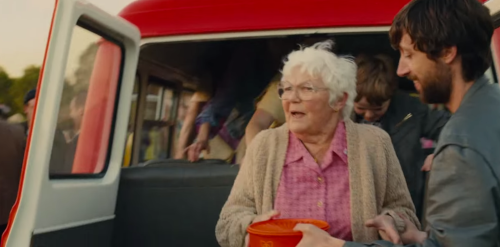
Where are my lesbians?
This is a new trigger for me, joining the other primary one in my life: whenever people are immensely lovely to other people. For example, 2014’s Pride (YOU SHOULD SEE THIS MOVIE), where a group of London-based LGBT-youth trade generous acts of kindness with a village of Welsh miners during 1984’s mining strike (screw you, Margaret Thatcher). Pride regularly makes me cry three to four times per viewing, in all the same places, with the consistency of a mathematical truth. The Pitt has plenty of these moments as well, as characters sacrifice their well-being to enhance those around them. Never is this more present than the late season one mass casualty event that turns the hospital into a war zone. The bravery, innovation, and diligence of the staff is nothing short of heroic.
So, as my heart is breaking (no pun intended) to see people try to be funny while they are close to death, The Pitt also hits me with instances of tremendous human kindness. And it all reminded that, even though my health journey has been pretty fantastic, there is still more road to walk. It may be that I am never able to see dramatic portrayals like this and not be impacted by it. I’m very privileged to have the internal wherewithal and external supports to work through this. While I don’t feel that I should go out of my way to find these moments in film and television, I don’t feel like I’m doing myself any favours by avoiding them either. I’m not trying to de-sensitize myself; instead, it’s an attempt to recognize that these moments are a part of life, and I am fortunate enough to be able to interrogate and challenge them without further significant danger.
I’d be remiss if I didn’t once again thank the folks who do the real work that the medical staff of The Pitt portrays so ably on-screen. A big kudos to everyone at:
Haliburton Highlands Health Services
Peterborough Regional Health Centre
Trillium Health Partners
Unity Health Toronto
